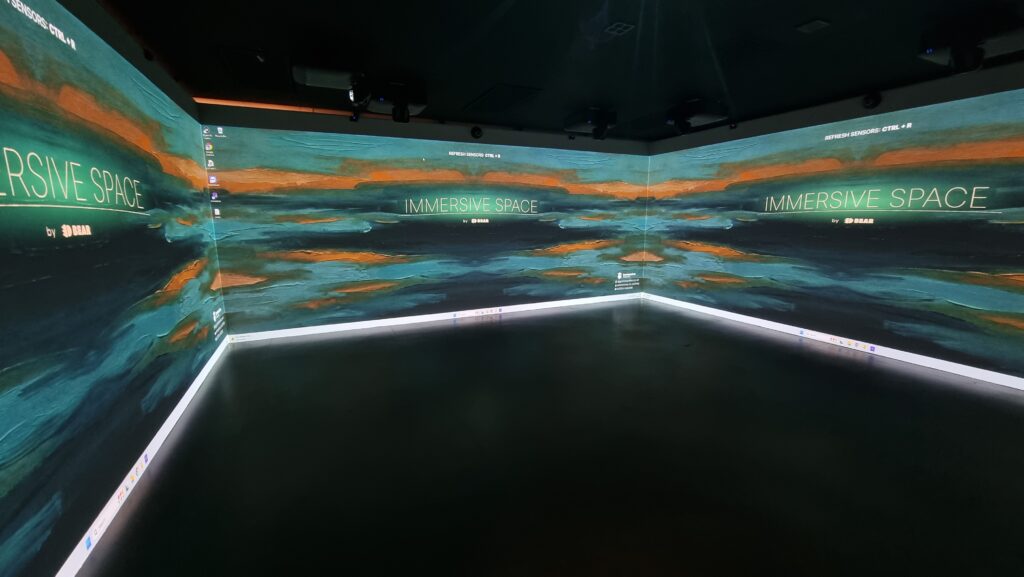
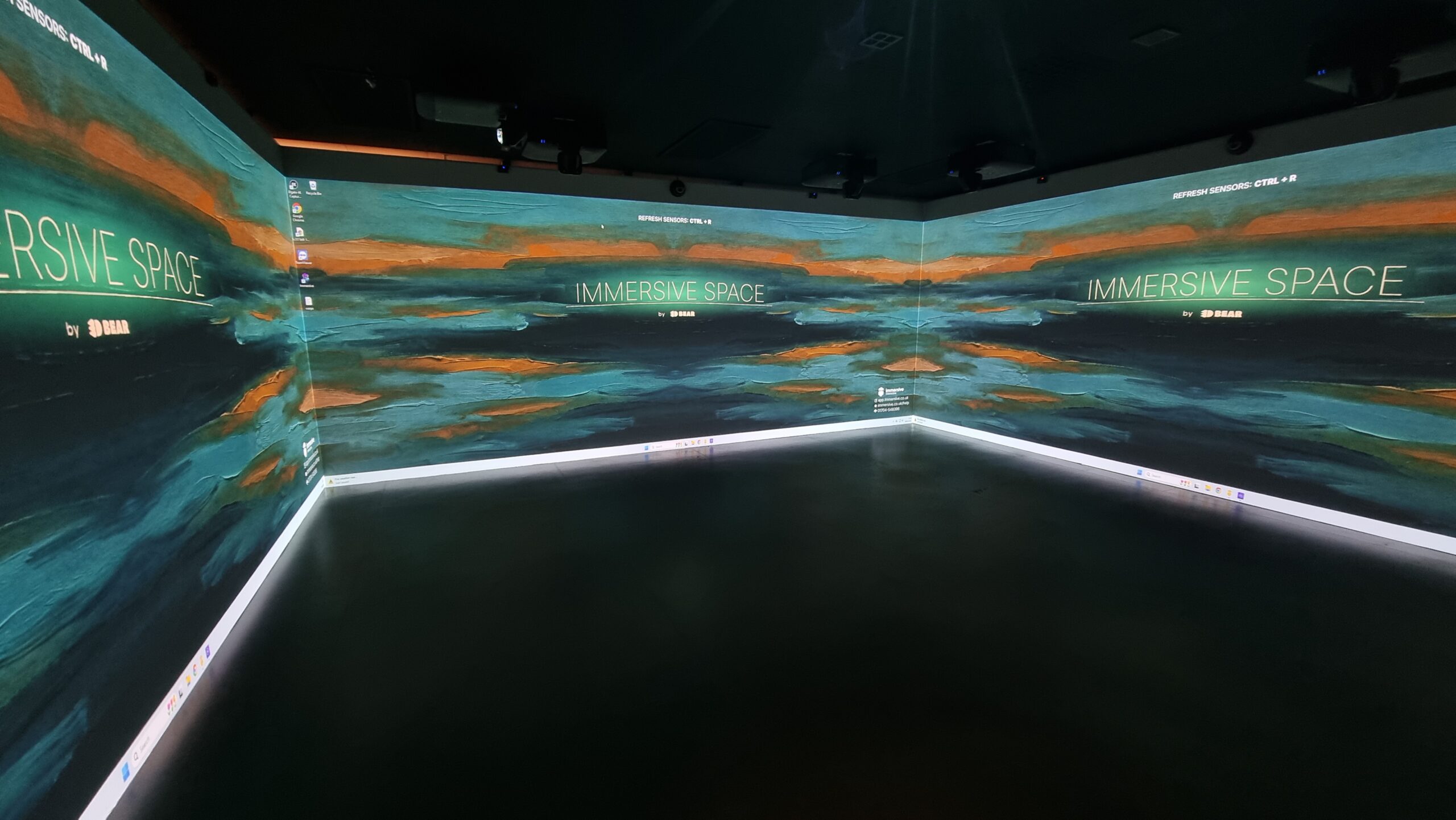
A traditional classroom is not always enough in situations where decisions must be made quickly and the environment is constantly changing, such as in emergency scenarios or high-pressure healthcare settings. At Oulu University of Applied Sciences (Oamk), this need led to the creation of an immersive environment where learning takes place as close to real-life situations as possible. Two immersive spaces were built on the Kontinkangas campus, located on different floors and designed to function together as part of a larger whole.
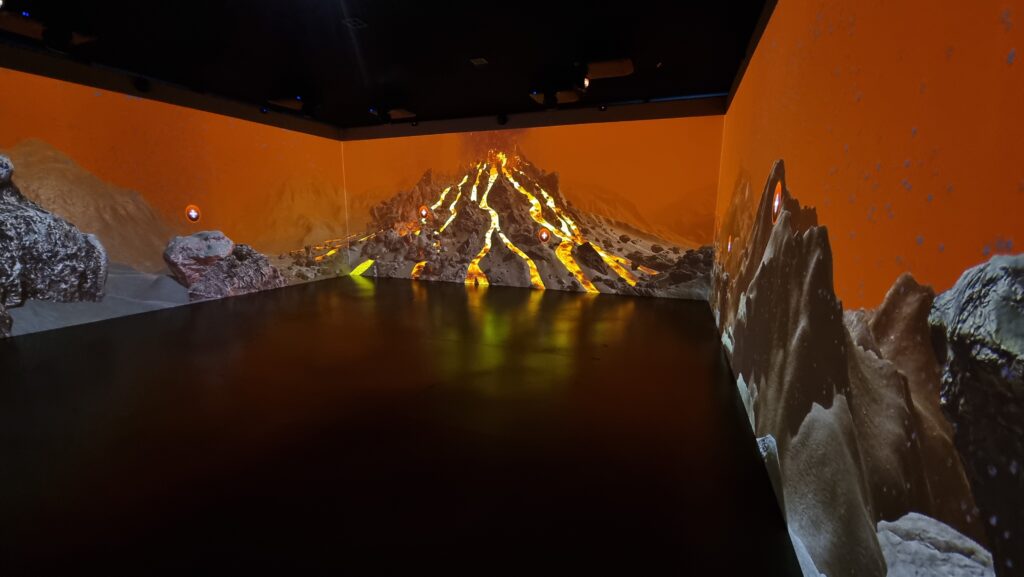
The immersive environment combines visuals, sound, scents and interactivity. It enables the creation of a wide range of scenarios, from accident situations to everyday environments, and learning can be supported with physical elements such as training equipment and simulation mannequins. Users can interact with the environment and receive immediate feedback, making learning concrete and closely tied to real situations.
The environment built on the campus is rare in Finland, and solutions of this scale are also uncommon in the Nordic countries. Having two spaces enables simultaneous use for different purposes, allowing teaching and development activities to run in parallel. The goal was to create an environment where learning is based on experience and action rather than theory alone.
“We wanted a multi-sensory environment for building different scenarios. The goal was to create a space where you can practice situations that don’t often occur in everyday life,” says Mika Paldanius, Development Manager at Oamk.
A complex solution built through collaboration
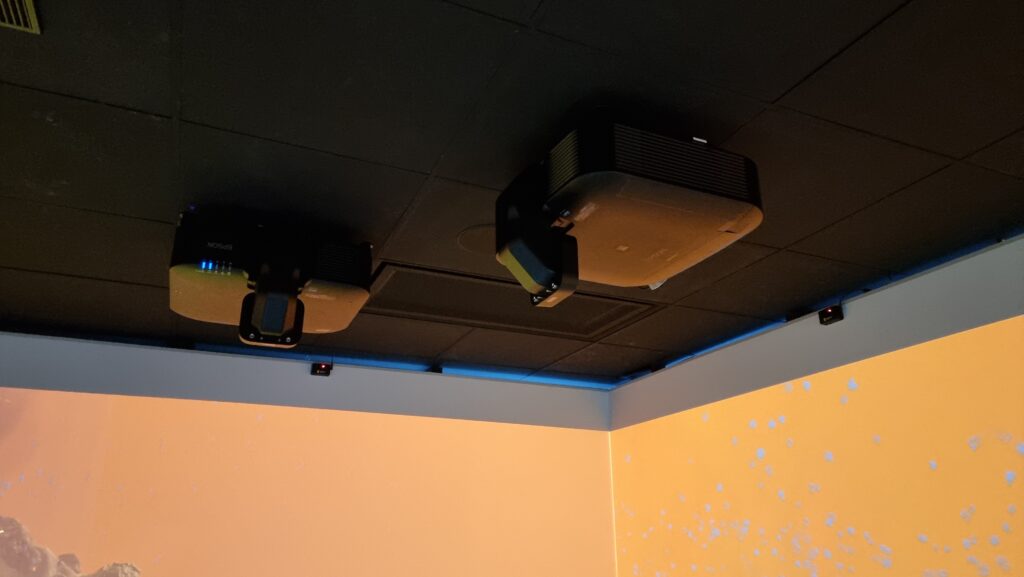
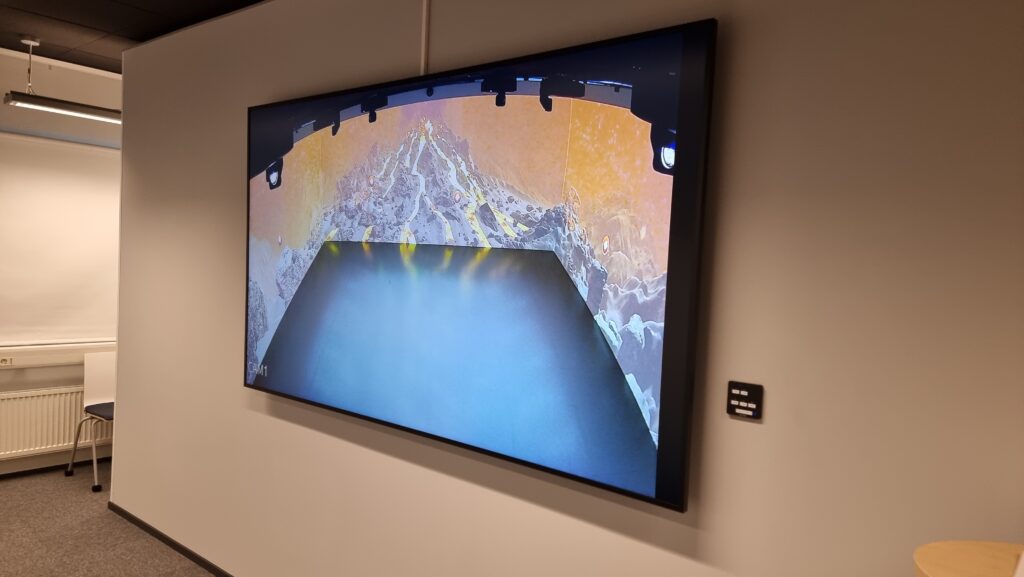
The overall solution was delivered through close collaboration between several partners. Software solutions were provided by 3DBear and Immersive Interactive. Epson’s professional-grade projectors were used in both immersive spaces, while Samsung information displays and a Crestron control system are used outside the spaces to monitor cameras within the immersive environments. The physical structures
were implemented by Are, and the University of Oulu’s ICT organization contributed to defining the AV solutions.
Netox was responsible for the design, installation, cabling and commissioning of the AV and audio solutions, and also played an active role in shaping how the overall solution was implemented.
“This wasn’t just about installing equipment, but about making everything work together. In this project, we had to solve several things that you can’t simply buy off the shelf,” says Jukka Konttinen, Account Manager at Netox.
Technical solutions require precision and experience
The immersive environment was built inside an existing teaching space, which set strict constraints for both structures and technology.
Multiple projectors are used to create a seamless visual experience across all four walls. The implementation required exceptional precision, as the positioning of the projectors had to be defined with millimeter-level accuracy. Planning also had to take into account ventilation, piping and ceiling structures. Solutions were built on-site and adapted to fit the surrounding environment.
“When you build a space within a space, nothing is ever completely ready. Everything has to be adjusted and fitted together based on the situation,” Konttinen explains.
From Netox’s perspective, the project above all highlights the importance of collaboration: the final result was achieved by bringing together the expertise of different parties at a practical level.
“When everything works together, the end result looks simple. That’s a sign that the solutions have been done right.”
An environment that opens new opportunities for companies as well
In addition to teaching, the immersive environment offers entirely new opportunities for collaboration with companies.
“The space allows companies to test and develop their own solutions in a realistic environment. They can bring their solutions here and try them out in scenarios that reflect real-world use,” says Paldanius from Oamk.
The combination of collaboration and hands-on implementation was visible throughout the project, as solutions were developed closely together by all parties involved.
The project also left a strong impression on those who built it.
“This is truly a unique solution. These days, putting a single screen on a wall doesn’t impress anyone, but this did. It’s something to be proud of,” Konttinen says.
Project contributors:
Lauri Moilanen, Tuomo Torvinen, Jarno Salmela, Mikko Tykkyläinen and Jukka Konttinen (Netox)
Rasmus Borg (3DBear)
Jori Löytynoja and Terho Lauri (University of Oulu ICT)
Sami Korpinen (Epson)
Mika Krankkala (Samsung)