
Reflections from the ServiceNow Executive Briefing Center
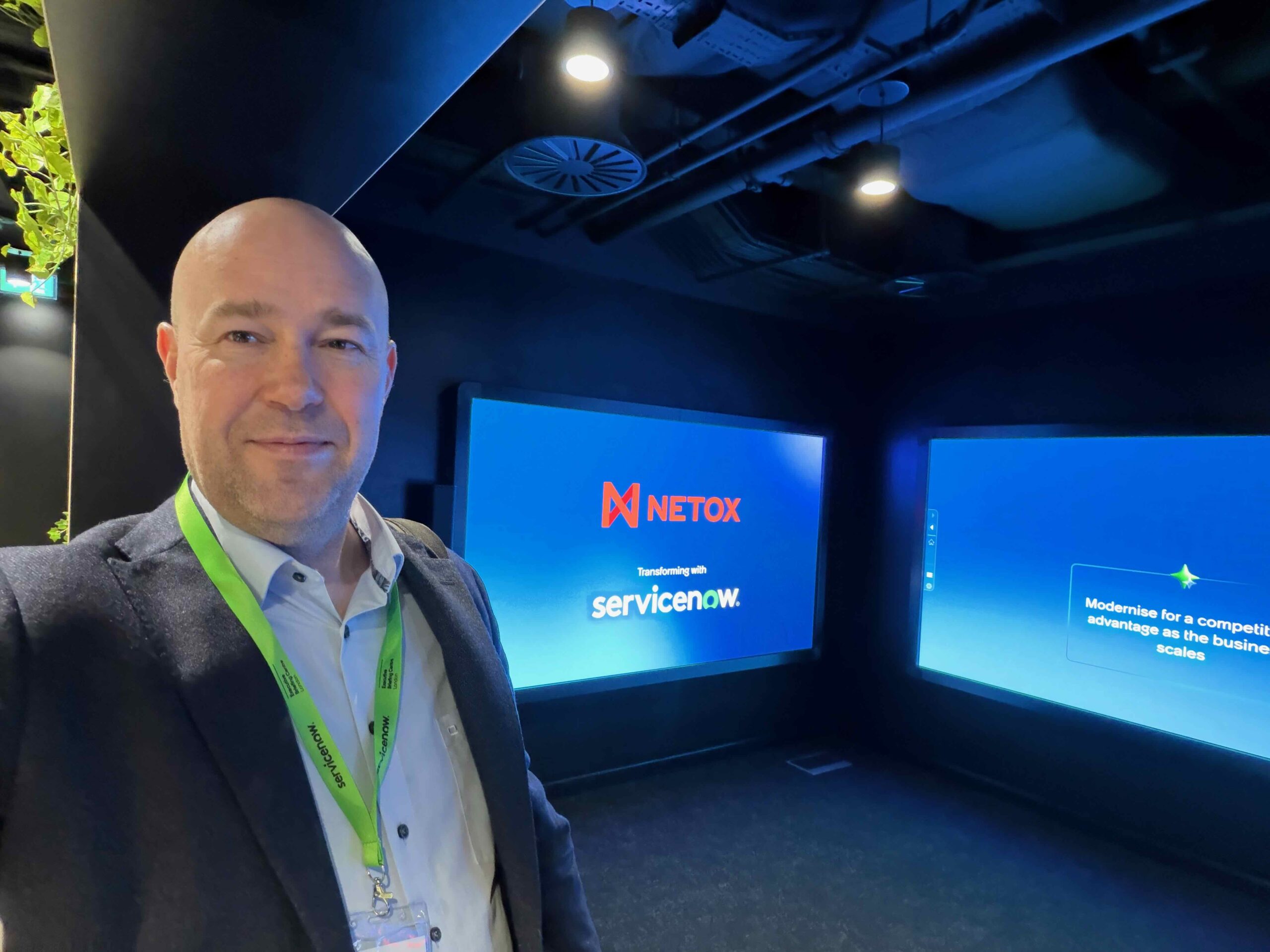
We recently visited the ServiceNow Executive Briefing Center in London. It was not a product demonstration. It was not a roadmap review. It was a strategic discussion about where Netox is heading and how technology enables that direction.

My main realization was simple: we have been using ServiceNow too narrowly.
In many markets, ServiceNow is still seen primarily as an IT service management tool. Globally, however, it is positioned as a platform that defines how an organization operates, how work flows across teams, how accountability is structured, and how decisions are governed.
That changes how you look at the platform.
Enterprise Architecture Is a Leadership Responsibility
One theme became very clear during the discussions: enterprise architecture is not an internal IT concern. It is a leadership responsibility.
When technology evolves without strategic direction, organizations end up with disconnected tools, overlapping capabilities, and fragmented data. Over time, this creates complexity, slows decision making, and makes scaling harder.
When architecture is driven by strategy, the outcome is very different. You build a clear operating model where:
- Processes are transparent and measurable
- Data is structured and governed
- Responsibilities are clear
- Automation and AI are built on a solid foundation
AI does not fix structural weaknesses. It amplifies them. If processes are unclear or data is inconsistent, AI will simply scale the confusion.
Leadership engagement in technology is not optional. It determines whether technology becomes a competitive advantage or a growing burden.

A Clear Strategic Choice: ServiceNow and Microsoft
At Netox, we have made a conscious decision to avoid too many disconnected tools.
Our strategic choice is to build around two core platforms: ServiceNow and Microsoft.
ServiceNow defines how work is structured and governed across the organization.
Microsoft provides identity, security, data, and productivity capabilities.
Together, they form the foundation for scalable service delivery, automation, and AI ready operations.
This is not about optimizing individual tools. It is about defining how the company operates.
Becoming a Frontier Firm Is Intentional
Microsoft uses the term Frontier Firm to describe organizations that systematically use technology to build competitive advantage.
This does not happen by turning on new features or testing isolated innovations. It requires clear direction and consistent execution.
It requires:
- Architecture driven by strategy
- Leadership that is genuinely engaged
- Data and processes designed with purpose
- An operating model that evolves, not just the tools
The visit reinforced one important point. Platforms like ServiceNow are no longer support systems. They are becoming part of the operational core.
It is about leadership being genuinely involved.
The Takeaway
Technology strategy cannot be delegated at the thinking level. Execution can be supported by partners, but direction must come from leadership.
If leadership is not involved, technology becomes reactive. Tools are added when problems appear. Complexity grows slowly and often unnoticed.
If leadership is involved, technology becomes intentional. Architecture follows strategy. Platforms are chosen with purpose. The operating model evolves in a controlled way.
For us at Netox, the objective is clear: build a scalable, AI ready operating model supported by the right platforms and governed intentionally.
This is not a short term initiative. It is a long term strategic commitment.
And for us, it is only the beginning. Join us in building the future.