At Netox, we have put an enormous amount of energy into building out our ServiceNow platform over the past year. The idea started at ServiceNow Knowledge in Las Vegas in the spring of 2025. I was genuinely worried about our competitiveness back then. I knew how much our competitors were investing in AI and automation, and I knew they were already pulling ahead on efficiency, quality and scalability.
We chose a path where we don’t build everything ourselves. Quite simply because we don’t have the time or the money for that. ServiceNow looked promising, not only as a service management system but as a platform for the company’s processes, workflows and AI.
After roughly twelve months of intense work, and plenty of hard days, the new system finally went live.
It would be nice to say everything went by the book. It didn’t.
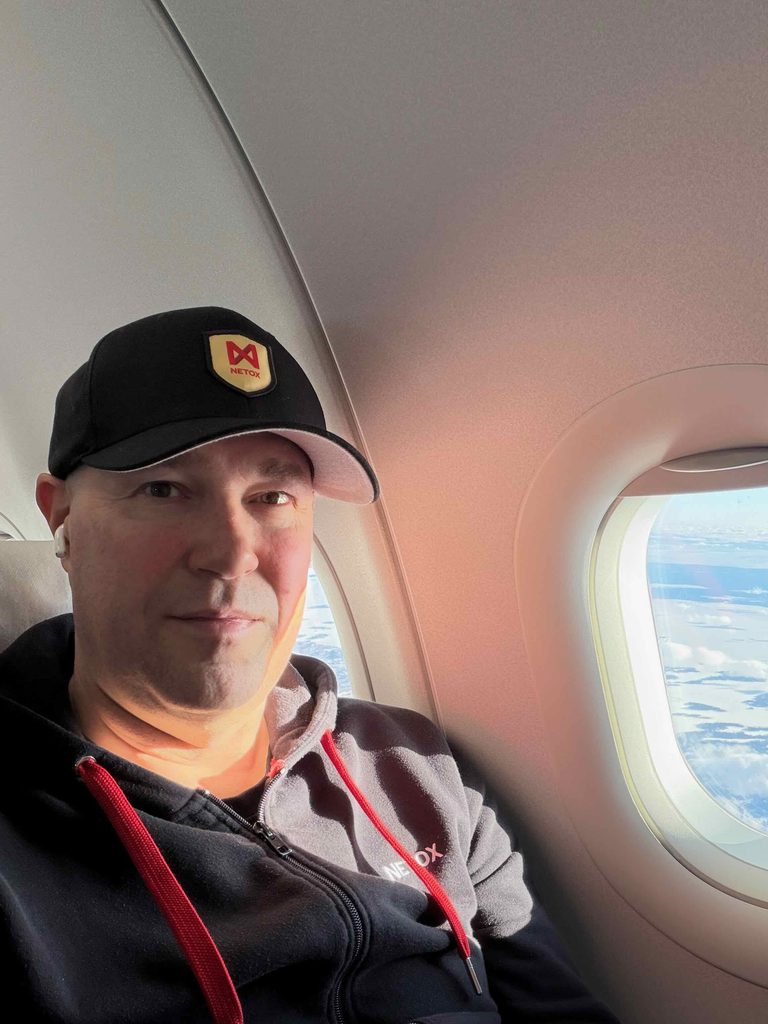
Launching into the unknown
The design phase and most of the building went the way they should. But clouds started gathering on the horizon as the go-live got closer. In an aircraft’s takeoff run there is a point after which you no longer brake. After that you go up in the air, whatever happens. In our project that point was already behind us, and only one option was left: keep the throttle down and take it to the finish.
Looking back, the biggest challenges had very little to do with technology. ServiceNow largely did what we expected it to do. The harder questions were about processes, data and people.
One of our original goals was to adopt as many out-of-the-box ServiceNow processes as possible and adapt our own way of working to them. On paper it was a beautiful idea. In practice it was close to impossible. Ways of working that have taken shape over years, customer-specific requirements and real business needs don’t bend into new models on the strength of a single decision.
With the customer migration, the goal was to clean up, complete and harmonise our data at the same time. But the real difficulty wasn’t the quality of the data. It was how much of the knowledge accumulated over the years consisted of exceptions, special cases and different interpretations. Moving it into a new system brought all of it to the surface.
Perhaps the hardest part of all was the change in user experience. Even when a new solution is better as a whole, people always compare it to the way of working they already know.
And as so often, the devil lived in the details.
Small technical issues, a single missing function, an edge case in an integration, a step in the process that now works differently. In a project meeting these look like details. In a user’s working day, their impact can be considerable.
I’m sure I underestimated the size of the change, at least in my own thinking.
That’s exactly why I still often ask myself what we should have done differently.
Should the project have been steered more closely? Were critical people left on the outer edge? Did change management get forgotten despite all the talk about it? Did I sit in an ivory tower and hear only the good news? Did I really create the conditions for every key person to commit? Did we try too hard to force old ways of working into a new system? Where should we have bent more, and where should we have held our chosen direction more firmly?
There is no shortage of questions.
And I think it is more than healthy to sit with them. Not so I can feel worse about it, but so that when the next project starts I’m a notch or two wiser. Maybe it’s worth taking a closer look at the departure date and the weather. Maybe sometimes you get to the destination more safely with a connection along the way. Maybe there are other ways to travel altogether. You can sometimes influence who you travel with, and you can choose your seat.
There are at least as many options and solutions as there are questions.
Every project leaves something for the next one
I’ve worked in a lot of different companies over my career. One thing about Netox has stayed with me. Here, building something new is seen as an opportunity, even though it always carries risk.
We genuinely have the chance to fail, too.
Building something new, doing something for the first time, jumping into the unknown, none of it happens without the occasional storm blowing in through the door. And when you’re allowed the time to learn from those moments without fearing the next failure, the next success is often bigger than the last one.
When I was in Oslo with our partner The Cloud People, Lars-Richard Horgmo said something to me over coffee that went roughly like this:
“Mikko, there’s one thing that always gives you away. No matter how well or how badly things go, the first thing you think about is what could be done better.”
That is one of the most beautiful things anyone has said to me in my working life.